Current weather data
We look at a lot of weather data in my courses. Here's what's going on locally.
Radar (Shows Rain & Snow)

What you're seeing here:
- Data from over 100 individual weather radar sites in the US (Indy, Evansville, Louisville, ...) gets stitched together to form one large "mosaic" or panorama dataset. This is what you'll see in just about every app.
- New data comes in as often as every 1-2 minutes from some radars, but not all of them... so I just create a new image every 10 minutes.
- Depending on which app you use, the colors may mean a different intensity level. So you'll have to think for yourself about which colors mean "I'll get wet" and which colors mean "I'll get soaked."
Infrared Satellite (Cloud Temperatures)
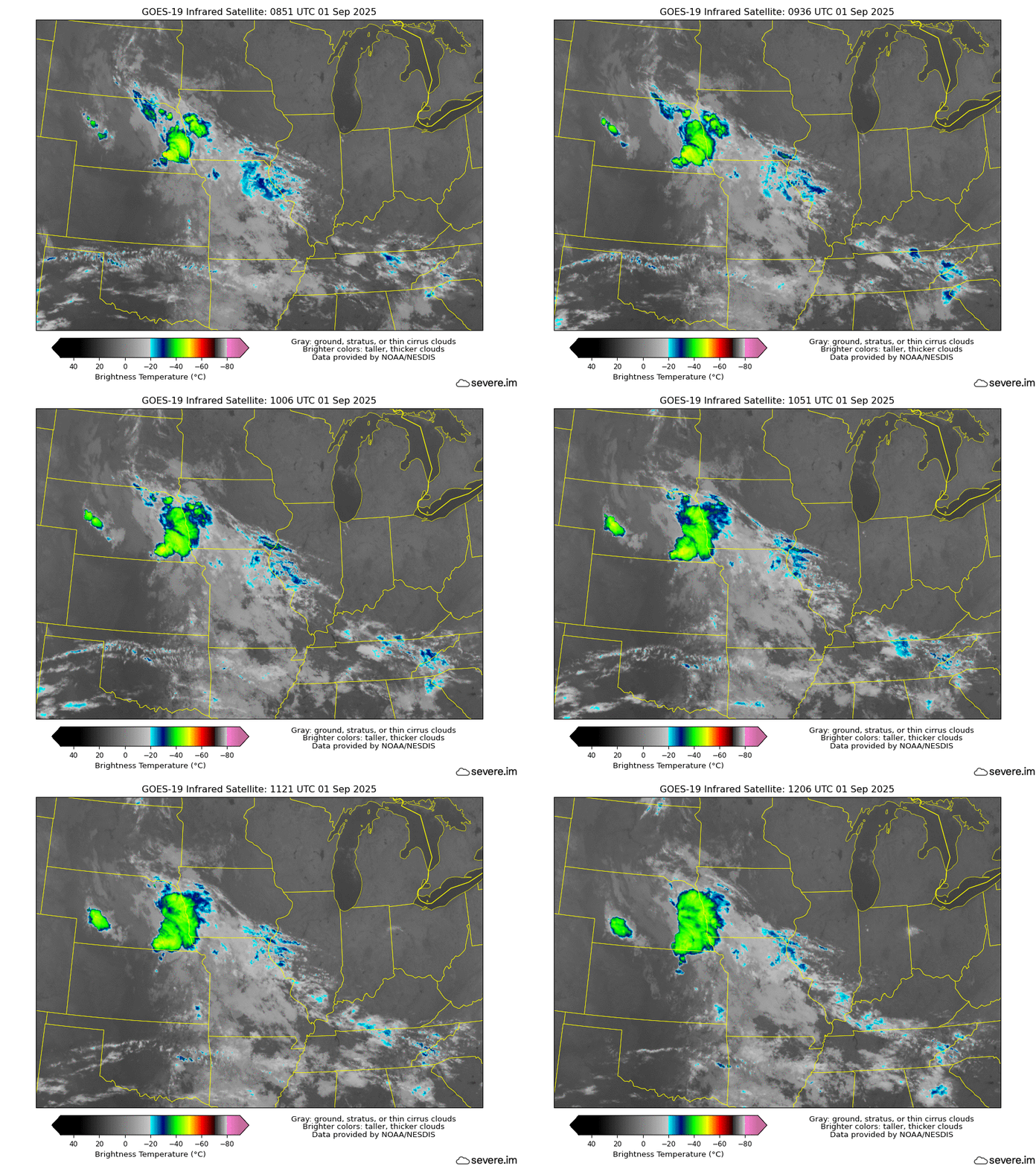
What you're seeing here:
- This specific data product is "infrared" satellite, meaning that it is a measurement of how warm/cold each pixel looks. The coldest temperatures are probably clouds (see description on the image).
- There are lots of other satellite data types available, for example: some that can only be used in daytime ("visible" imagery); some that work just for humidity ("water vapor" imagery).
- We can use this data to find thunderstorms, estimate the strength of hurricanes, and more.
About the data in general
- All this data is freely available from NOAA. I download the data from their servers, and produce these images myself.
- The website "severe.im" is a domain I've used to share weather data for a long time.
- For programmers: the data are kept in Amazon S3 buckets. The radar data are plotted in an old program called Grads, and astute observers can tell the satellite data are plotted using Python.